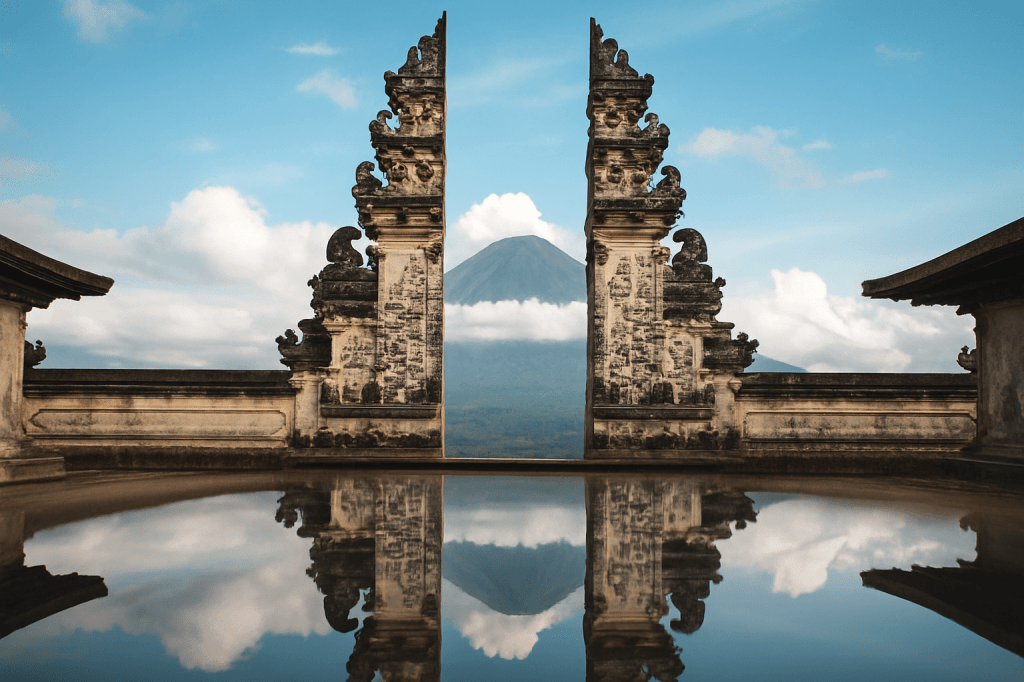
If you’ve been daydreaming about Bali and scrolling through those jaw-dropping Instagram posts, chances are you’ve come across the iconic split gateway photo with Mount Agung perfectly framed in the middle. Yep, that’s the famous shot everyone talks about when visiting Lempuyang Gates of Heaven Bali. It’s one of those places where the hype is real, but also—let me be straight with you—there are some things people don’t tell you until you’re standing in line with 200 others trying to get “the shot.” I’ve been there, I’ve waited, I’ve sweated buckets, and I’ve learned a few things that I wish someone told me beforehand.
So, let’s dig deep into everything—from logistics, costs, lines, etiquette, alternatives, and whether or not it actually lives up to the hype. Think of this less like a brochure and more like me sitting across from you at a coffee shop in Canggu, casually spilling the truth about this must-visit Balinese temple.
Read also: Bali Coffee
Why People Obsess Over Visiting Lempuyang Gates of Heaven Bali
There’s no denying it—this place is ridiculously photogenic. The temple itself is known locally as Pura Lempuyang Luhur, and it’s one of the oldest and most sacred temples in Bali. The split gate is technically just the entrance, not the main temple, but because of its alignment with Mount Agung, it gives that surreal “heavenly” vibe.
What makes it a big deal isn’t just the view. It’s the cultural importance. Balinese Hindus come here to pray, and the temple is part of the Sad Kahyangan Jagad, which are the six holiest places of worship on the island. Tourists tend to overlook that side because the photos dominate social media, but if you strip away the Instagram hype, this place has been deeply spiritual to locals for centuries.
I’ll admit, I was one of those people lured by the famous mirrored water illusion photo (spoiler: it’s not real water—it’s a camera trick with glass held under the lens). But what surprised me was how peaceful the vibe felt once you stepped away from the photo line.
There are more than 1,700 steps leading up into the mountain to reach the highest point of the temple complex. Most people skip the climb, but honestly, it’s one of the most rewarding parts if you’re willing to sweat it out.
How to Get There Without Losing Your Mind
Distance and Travel Time
Lempuyang Temple is located in Karangasem Regency, on the eastern side of Bali. If you’re staying in popular areas like Ubud, Seminyak, or Canggu, expect a long ride—easily 2 to 3 hours depending on traffic. From Amed, it’s closer, about 40 minutes.
Here’s what I learned: if you’re based in Ubud and thinking of doing a “day trip,” be ready for a solid 8–10 hours out of your day. Traffic can be brutal on Bali’s narrow roads, especially if you’re heading out in the morning when everyone else has the same idea.
Best Way to Reach
You’ve basically got two options:
- Hire a private driver – This is what most people do. Costs range from IDR 600,000–800,000 for the day (around $40–$55 USD). Worth it if you’re traveling in a group or couple because you can split the cost, and you won’t have to stress about navigating.
- Rent a scooter – Not for the faint of heart. It’s cheap (IDR 100,000/day or so), but the ride is long and exhausting, with winding mountain roads. I did it once on a scooter, and I’ll be honest, my back hated me the next day.
If you’re the type who likes to optimize, pair it with stops at Tirta Gangga Water Palace or Tukad Cepung Waterfall so you’re not just traveling all that way for one stop.
The Famous Photo Line: Here’s the Real Deal
Okay, let’s talk about what 90% of tourists are here for—the photo at the split gate.
When you arrive, you’ll be asked to register, borrow a sarong (mandatory, even for men), and then if you want the iconic photo, you get a number from the temple staff. They keep track, and when it’s your turn, they’ll call you up.
Now, the wait can be wild. On my first trip, I got number 78 and ended up waiting nearly three hours. Locals working there have it down to a science—they’ll take your photo for you, and yes, they use the “mirror trick” with a piece of glass under the camera to make it look like there’s a perfect reflection of water.
Was it worth waiting that long? Honestly, depends on your patience level. The picture came out amazing, sure, but three hours sitting around in the hot sun wasn’t exactly fun. I’ve met people who showed up at 6 AM and still had a one-hour wait. The only way to really avoid the queue is to go super early (like, sunrise early) or later in the afternoon, though by then the lighting isn’t as dreamy.
And here’s something that blew my mind: despite being the “Gates of Heaven,” the temple staff will let you do goofy poses, jumps, yoga balances—pretty much anything short of being disrespectful. So yes, you’ll see tourists doing handstands at one of Bali’s holiest temples. Take that as you will.
Costs and Entrance Fees
A lot of travelers get confused about costs, so let me break it down:
- Entrance to Lempuyang Temple: There’s technically no fixed fee, but there’s a donation system. Expect to pay around IDR 50,000 ($3–4 USD).
- Parking: IDR 5,000–10,000 ($0.50–0.70 USD).
- Shuttle Bus: In recent years, visitors aren’t allowed to drive all the way up to the temple parking. You’ll need to take a shuttle bus from the base, which costs about IDR 45,000 ($3 USD) return.
- Photo: No extra charge, but you’re expected to tip the person who takes it (I gave IDR 20,000).
So in total, budget about IDR 120,000–150,000 ($8–10 USD) per person for the whole experience.
Dress Code and Etiquette (Don’t Skip This Part)
Even if you’re only coming for the picture, remember this is a sacred Hindu temple. You’ll be required to wear a sarong, and shoulders should be covered.
One thing I noticed is that many tourists treat it like a backdrop instead of a holy site. Please don’t climb on the temple structures or sit on altars (I saw this happen, and locals were visibly upset). Keep your voice down, especially when ceremonies are happening.
Balinese culture is incredibly welcoming, but respect goes a long way. If you’re unsure about something, just watch what locals do and follow their lead.
When’s the Best Time for Visiting Lempuyang Gates of Heaven Bali?
Timing is everything here.
- Sunrise (5:30–7 AM): The sky can be spectacular, with Mount Agung glowing in soft light. Downside: you’ll be waking up around 3 AM if coming from Ubud.
- Morning (8–10 AM): Still nice lighting, but this is when lines start to pile up.
- Afternoon (3–5 PM): Quieter crowd, but Mount Agung often gets covered in clouds by then.
Personally, my favorite time wasn’t even the “perfect photo hour.” I went once at 2 PM, and though I couldn’t see the mountain clearly, the temple grounds were almost empty. It felt calm, and I got to actually walk around instead of spending most of the visit waiting in line.
Beyond the Gates: Exploring the Full Temple Complex
Here’s something most tourists don’t realize: the “Gates of Heaven” is just one part of a much larger temple complex.
There are actually seven different temples spread across the mountain, with the highest one at over 1,000 meters. Climbing all the steps takes around 2–3 hours, depending on your fitness. Along the way, you’ll pass shrines, moss-covered stone carvings, and get amazing panoramic views of East Bali.
According to Indonesia’s Ministry of Tourism and Creative Economy, the temple is not only a major spiritual site but also part of Bali’s efforts to preserve cultural tourism. This means they actively encourage visitors to explore respectfully beyond just the Instagram spot.
I’ve done the full hike once, and while it was sweaty, it was also one of the most authentic experiences I’ve had on the island. There were barely any other tourists, just locals coming to pray. If you’ve got time and stamina, don’t skip this.
Common Mistakes People Make
After watching tourists here for hours (trust me, when you’re waiting in line, people-watching becomes a sport), I noticed a few things travelers often get wrong:
- Showing up late morning thinking it’ll be quick. Nope, you’ll wait the longest then.
- Dressing for Instagram, not the temple. Short skirts, low tops, or see-through dresses don’t go down well.
- Forgetting cash. Cards aren’t accepted, and you’ll need small bills for donations, shuttle, and tips.
- Getting cranky in line. The wait is long. Bring snacks, water, maybe a book or music. Complaining won’t make it faster.
Is Visiting Lempuyang Gates of Heaven Bali Worth It?
This is the million-dollar question, right?
If your goal is to tick off that iconic Instagram photo, yes, it’s worth it—but go prepared. It’s not as simple as showing up, snapping a pic, and leaving. It’s a commitment in time, energy, and patience.
If you’re into culture and spirituality, then it’s absolutely worth it. The deeper you go into the temple complex, the more meaningful it feels. And even if Mount Agung is hiding behind clouds, the journey there shows you a side of Bali many people miss—the villages, rice terraces, and daily life far away from beach clubs.
From my own experience, I’d say don’t expect perfection. Some days you won’t see the mountain. Some days the line will test your patience. But if you approach it with the mindset of being part of something bigger than just a photo, it’s a memory that sticks with you.
Nearby Places to Add to Your Trip
One of the best ways to make the long journey east worthwhile is to combine it with nearby attractions. Here are a few I recommend:
- Tirta Gangga Water Palace – A stunning royal palace with koi ponds and fountains. Perfect stop on the way back.
- Ujung Water Palace – Less crowded, similar vibe with old Dutch-Balinese architecture.
- Amed – A quiet coastal village known for snorkeling and diving. Great overnight stay if you don’t want to rush back west.
- Tukad Cepung Waterfall – One of the most magical waterfalls in Bali, with sunlight beaming through the cave opening.
After spending time at Lempuyang, I realized the whole experience is less about a single photo and more about the journey itself. The long ride through Bali’s eastern countryside, the quiet moments at the temple while locals come to pray, and the mix of awe and exhaustion when you finally reach the top—it all blends into something way more memorable than just a snapshot.
If you’re planning your trip, go in with patience and an open mind. Some days the clouds will hide Mount Agung, some days the wait will be longer than you hoped. But that’s part of traveling here—it teaches you to slow down, to soak in the culture, and to appreciate the beauty that isn’t always staged for a perfect picture.
So whether you’re chasing that dreamy “Gates of Heaven” shot or just curious to explore one of Bali’s most sacred spots, make the trip your own. Pair it with other nearby places, bring a little extra time in your schedule, and remember why Balinese Hindus hold this temple in such high regard. Do that, and visiting Lempuyang won’t just be another thing ticked off a list—it’ll be one of those Bali memories that stays with you long after you’ve left the island.
 Bali Pride
Leave a reply to Eco-Friendly Bali Vacation Ideas for a Sustainable and Guilt-Free Island Getaway – Bali Pride Cancel reply